Artificial Intelligence (AI) is transforming industries around the world. From ChatGPT and Gemini to self-driving cars and AI-powered business tools, AI is becoming an essential skill for the future.
The biggest question beginners ask is:
“Where should I start learning AI?”
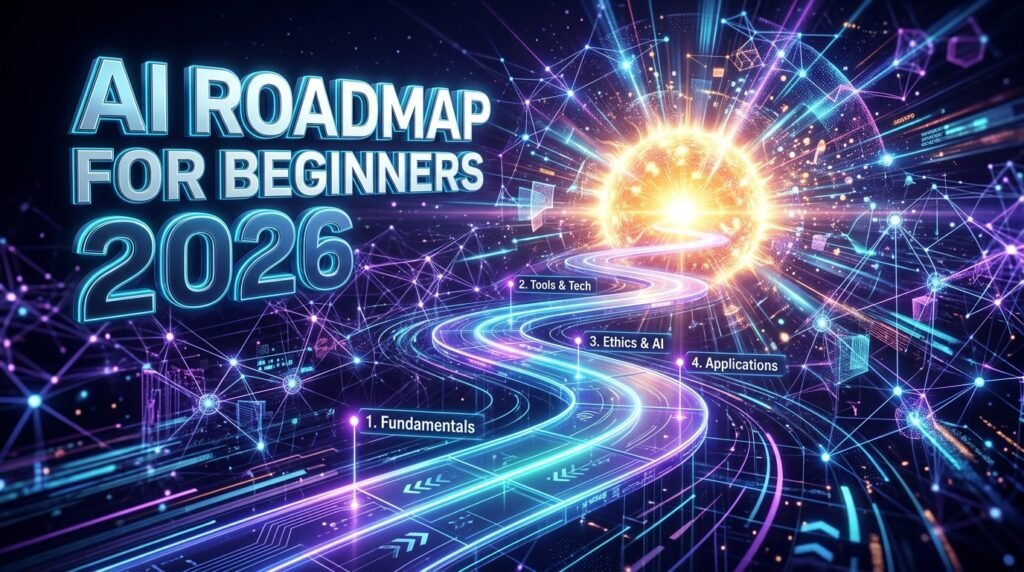
This roadmap will help you learn AI step by step, even if you have no coding experience.
Why Learn AI in 2026?
AI skills are in high demand because businesses are using AI for:
- Content Creation
- Customer Support
- Marketing
- Education
- Software Development
- Data Analysis
Learning AI today can create new career and income opportunities.
Step 1: Understand AI Basics
Before using advanced AI tools, understand the fundamentals.
Topics to Learn
- What is AI?
- Machine Learning
- Deep Learning
- Generative AI
- Large Language Models (LLMs)
At this stage, focus on concepts rather than technical details.
Step 2: Learn How AI Tools Work
Start using popular AI tools.
ChatGPT
Use for:
- Writing
- Learning
- Research
- Coding Help
Website:
https://chatgpt.com
Gemini
Use for:
- Research
- Brainstorming
- Productivity
Website:
https://gemini.google.com
Microsoft Copilot
Use for:
- Work Assistance
- Content Creation
Website:
https://copilot.microsoft.com
Using AI daily helps you understand its strengths and limitations.
Step 3: Learn Prompt Engineering
Prompt Engineering is one of the easiest AI skills to learn.
Example
❌ Tell me about AI.
✅ Explain Artificial Intelligence in simple language with real-life examples.
Better prompts produce better AI responses.
This skill is useful even if you don’t know coding.
Step 4: Learn Basic Python
Python is the most popular programming language for AI.
Topics to Learn
- Variables
- Loops
- Functions
- Lists
- Dictionaries
Don’t try to master everything at once.
Learn enough Python to understand AI projects.
Step 5: Understand Machine Learning
Once you know Python basics, start learning Machine Learning.
Topics
- Training Data
- Models
- Predictions
- Classification
- Regression
At this stage, focus on understanding how machines learn from data.
Step 6: Explore AI Tools and Platforms
Learn how modern AI platforms work.
Useful Platforms
- ChatGPT
- Gemini
- Claude
- Perplexity AI
- Canva AI
Experiment with different tools regularly.
Step 7: Build Small Projects
The fastest way to learn AI is by building projects.
Beginner Project Ideas
- AI Blog Writer
- AI Image Generator
- AI Resume Builder
- AI Chatbot
- AI Content Planner
Projects help you gain practical experience.
Step 8: Learn AI for Content Creation
Many beginners use AI for content creation.
Create
- Blog Posts
- YouTube Scripts
- Instagram Captions
- Social Media Content
- Marketing Copy
This is one of the easiest ways to start earning with AI.
Step 9: Learn AI Automation
AI becomes more powerful when combined with automation.
Learn Tools Like
- Zapier
- Make
- n8n
Automation can save hours of manual work.
Step 10: Stay Updated
AI changes very quickly.
Follow:
- AI Blogs
- YouTube Channels
- AI News Websites
- Industry Experts
Continuous learning is important in AI.
Free Resources to Learn AI
ChatGPT
Google Gemini
Claude AI
Perplexity AI
Coursera
Microsoft Learn
Google AI Learning
Common Mistakes Beginners Make
❌ Trying to learn everything at once
❌ Skipping fundamentals
❌ Watching tutorials without practice
❌ Ignoring prompt engineering
❌ Not building projects
❌ Giving up too early
90-Day AI Learning Plan
Month 1
- Learn AI Basics
- Use ChatGPT Daily
- Learn Prompt Engineering
Month 2
- Learn Python Basics
- Understand Machine Learning Concepts
Month 3
- Build Small AI Projects
- Explore Automation Tools
By the end of 90 days, you’ll have a solid AI foundation.
Future Career Opportunities in AI
AI skills can help you become:
- AI Content Creator
- Prompt Engineer
- AI Consultant
- Automation Specialist
- Data Analyst
- AI Developer
Demand for AI-related skills is expected to continue growing.
Conclusion
Learning AI doesn’t have to be difficult. The best approach is to start with the basics, use AI tools daily, learn prompt engineering, understand Python, and build small projects.
Remember:
Learn → Practice → Build → Improve
Follow this roadmap consistently, and you’ll be well on your way to mastering AI in 2026.